Childcare classroom design is for children aged 2-3. The childcare center is designed as a transition for children from home to school. Through the close cooperation between parents and teachers, children can gradually get rid of anxiety and leave their parents. The teacher supports children’s natural development with respect and gentleness and encourages children to be independent. Children in small classes begin to lay the foundation for future development. They gradually form their own personalities, establish life goals, develop social skills, and begin their learning journey.
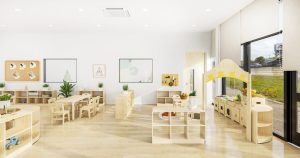
Childcare centers should focus on creating an environment that is suitable for their specific age group. For example, preschool design and types of furniture should focus on providing a safe and nurturing environment where children can explore and develop their skills. A well-designed classroom interior can help create a stimulating and engaging learning atmosphere, social and grow for children.
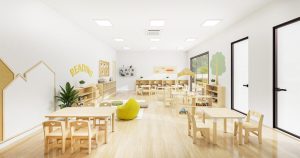
Show cultural ideas
Secondly, the design of the childcare center should also show the corporate culture and education concept. The main purpose of the design is to integrate culture into the space, so that the space can generate greater value, and more importantly, it can help the organization to carry out later publicity and promotion.
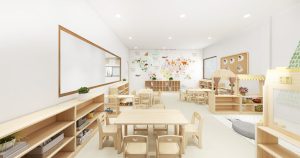
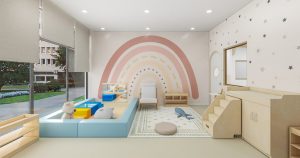
The classroom is a small community. Here, we divide the classroom into several areas to help children focus and arouse their interest. The personal care area focuses on cultivating children’s hygiene habits. We instruct children to put on and take off their clothes and eat by themselves. This area is full of language and sensory communication, and children get real experiences through their own hands. Carefully selected teaching aids are placed on the shelves in the classroom. Various teaching aid activities promote the physical development of children and encourage them to make progress in art, music, and various operating games.
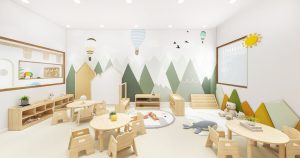
Creating a safe and comfortable environment for children is essential in any childcare classroom. Childcare interior design combines the use of space, furniture, colors, and materials to create an inviting and stimulating learning environment.
Conclusion
The right balance between aesthetics, safety, comfort, and practicality is key when it comes to designing the perfect childcare classroom. By combining these elements together in a thoughtful manner, it is possible to create an engaging and inspiring space that encourages creativity and exploration among children. Moreover, it should also reflect the values of the organization or institution. By creating an environment that is both stimulating and nurturing, childcare classroom design can help ensure that children are able to reach their full potential.
Retail Display
Exploring More Interesting Ideas