Think Vertical, Not Horizontal
In a shop under 50 square meters, every floor centimeter counts. The fastest way to free walking space is to move display upward. Wall-mounted shelves, hanging hooks, and tall glass cases use air, not floor, to show product.
Draw the plan on graph paper before buying anything. Mark the door, the window, and the one fixed pillar. Then place fixtures only along the walls, leaving the center as a clean, uncluttered aisle. A tight small phone shop interior feels larger when customers see open floor and easy movement.
Choose Slim, Floor-to-Ceiling Wall Units
Standard wall cabinets are 30cm deep; in a small shop, ask for a 20cm deep unit. Slim cabinets still hold phones and thin accessories but leave a wider aisle. Run them from floor to ceiling so no storage space is wasted above.
Use adjustable glass shelves inside. Phones grow taller every year, and fixed shelves quickly look wrong. Add a low plinth drawer at the bottom for stock. Rtdisplay makes slim wall cabinets in oak, white, or matte black for tight compact electronics shop design jobs.
Use a Single Narrow Island Table
Skip the four-table showroom layout. One long, narrow island in the middle is enough to hold four to six demo phones. A table 1.8m by 0.5m leaves a comfortable 1m aisle on each side.
Choose a table with rounded ends so people do not bump hips. Run a charging rail under the top so cables hide inside. Keep the surface empty except for the demo units; clutter on a small island reads as messy from across the street.
Borrow Corner Space With a Curved Cabinet
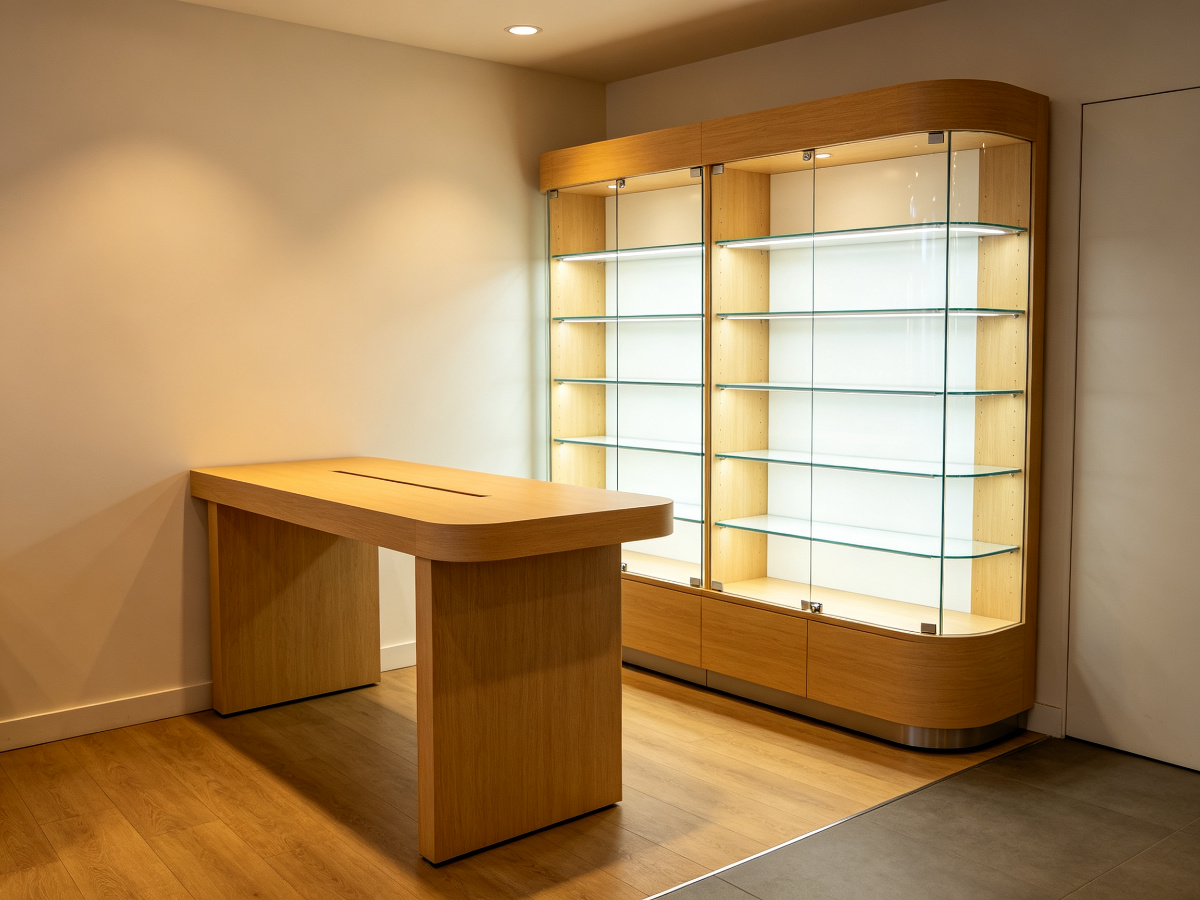
Corners are dead space in most small shops. A curved corner cabinet turns them into a display bay with two glass sides. Use it for your two most expensive phones, lit by a warm LED strip inside.
The curve also softens the room. In a square 40-square-meter unit, one rounded corner makes the whole space feel less boxy. Pair the curved cabinet with a low side table so customers can set down bags while comparing devices.
Build a Wall of Hooks for Accessories
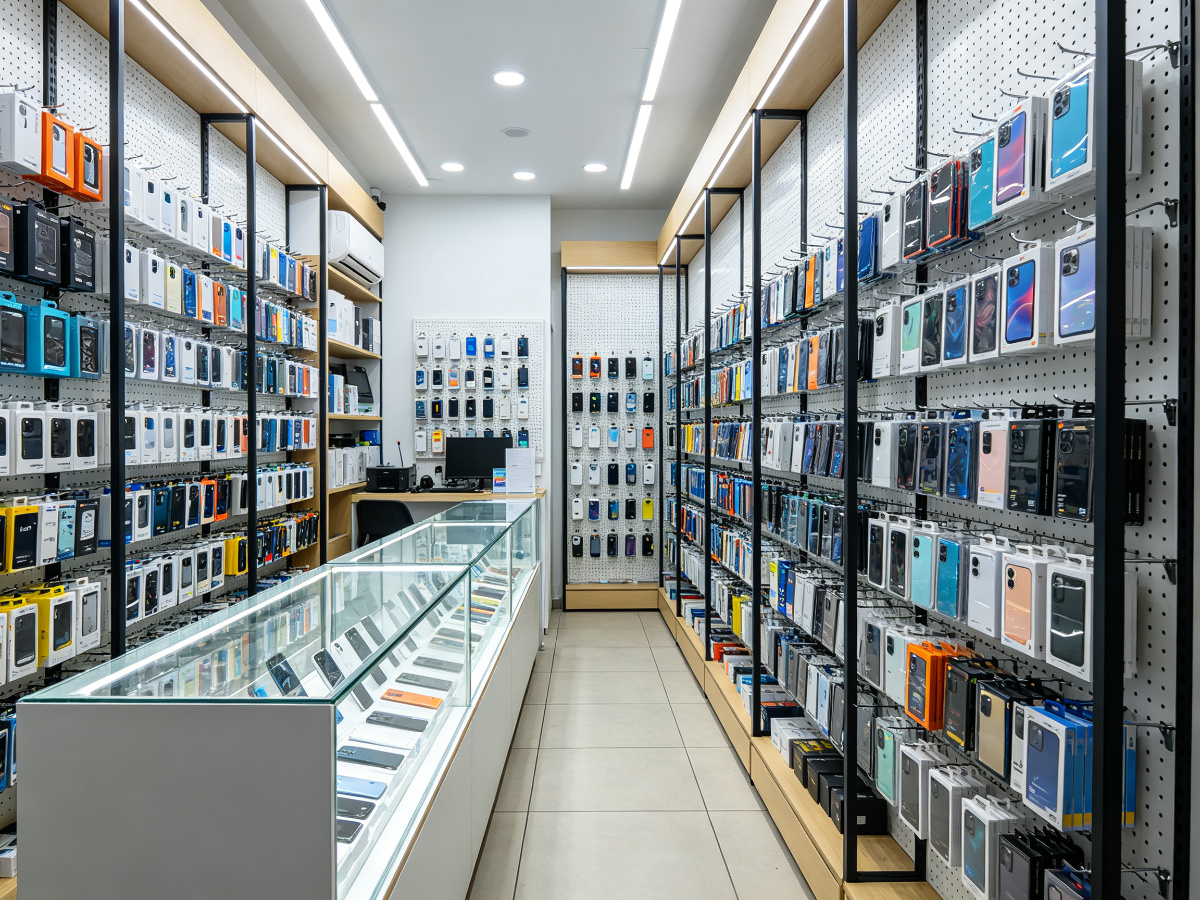
Cases, cables, and earbuds take a lot of SKUs to look full. A pegboard wall behind the counter does this in under 2 square meters. Paint the board the same color as the wall so it disappears behind the product.
Group by color or by category so the wall reads as one visual block. Keep hooks evenly spaced; uneven rows look unfinished. Rtdisplay supplies space-saving display racks and hook panels in custom widths to fit odd wall lengths.
Tuck Repair Into a Counter-Width Corner
If you offer repair, do not give it a whole room. A 1.2m repair bench tucked beside the till is enough for most small shops. Add a roll-down curtain or a folding screen to hide the bench after hours.
Keep the bench visually connected to the sales floor through a glass panel. Customers waiting for a battery swap can still browse cases. Rtdisplay builds a compact cell phone repair kiosk that doubles as a narrow counter, so you do not lose a meter of sales floor.
Keep the Color Palette Light and Calm
Small rooms shrink when painted dark. Stick to white walls, pale oak fixtures, and one soft accent color such as sage green or warm grey. Two materials maximum keeps the space calm and makes the product pop.
Reflective surfaces help too. A glossy tile floor, a glass cabinet door, or a mirror panel all bounce light around. Avoid deep wood finishes, which absorb light and make a 40-square-meter shop feel like a closet.
Use Mirrors and Glass to Widen the Room
A well-placed mirror doubles the perceived width of a narrow shop. Put a mirror panel on the end wall so customers see a longer aisle as they enter. Frame it in the same oak as the cabinets so it reads as a design choice.
Glass cabinet doors do the same job without a mirror. Clear doors let sightlines pass through the cabinet to the wall behind, so the unit feels lighter. Keep doors spotless; fingerprints on glass in a small space are impossible to miss.
Design the Window as a Mini Kiosk
For a small street shop, the window is your billboard. Build a low plinth under the window and place two hero phones on lit stands. Add a small LED strip under the plinth to glow onto the pavement at night.
Avoid overfilling the window. Three items, well lit, beat a packed shelf. Rtdisplay also builds a freestanding mobile accessories kiosk if you want to test a small mall cart before committing to a full shop fit-out.