
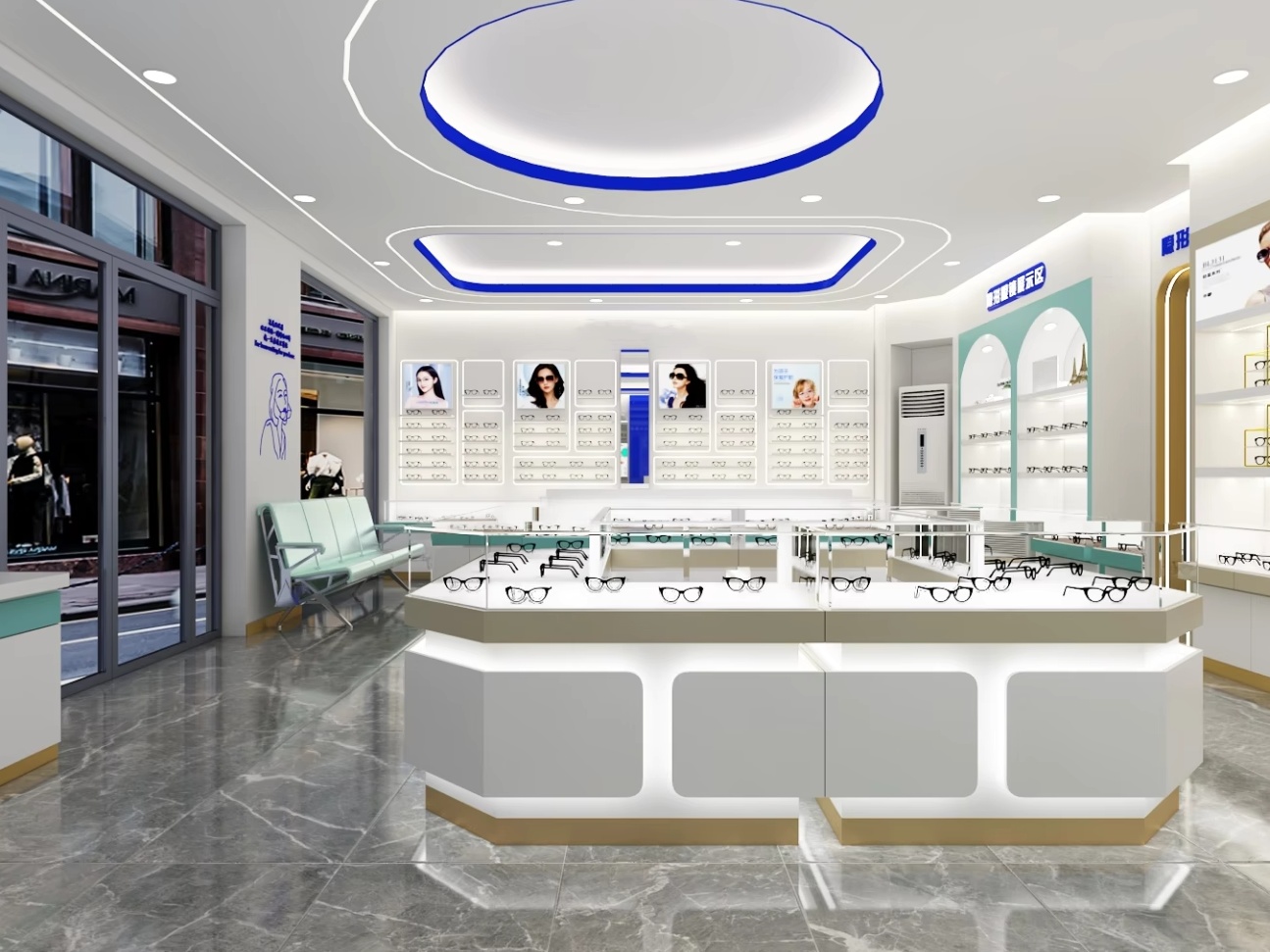
Introduction
Many eyewear stores mix premium and value brands together on the same displays. As a result, customers cannot tell which frames cost more and which ones are budget-friendly. Staff members constantly have to explain — “this one is imported, that one is local.” This confusion creates two problems. Premium brands lose their perceived value when placed next to cheaper options. Value brands get overlooked because customers assume everything is expensive. The solution is not better signage or more staff training. It is smarter display planning. This article covers four ways to separate premium and value brands using eyewear displays. With these methods, customers will understand the price difference without asking a single question.
1. Separate by Location — Premium in Front, Value in Back
Location is the most obvious signal of value. Customers naturally pay more attention to what they see first. The prime positions in any eyewear store are the front entrance area, the main wall facing customers, and the front of the island displays. Reserve these spots for premium brands only.
Place value brands toward the back, along the side walls, or on the sides of island units. This arrangement creates a natural journey. Customers walk past the premium section first, then arrive at the value section. By the time they reach the value area, their expectations have already been adjusted. They recognize the difference because they saw the premium section first. This sequence works without any additional signage.
Additionally, keep the two sections physically separated. Do not place a premium display right next to a value display. Give each section its own zone. The separation makes the distinction obvious. Customers see a clear transition, not a confusing mix.
2. Separate by Material — Premium in Wood or Metal, Value in Standard Laminate
The material of the display itself sends a strong signal about the products inside. Premium brands belong in premium materials. Solid wood, engineered wood with real wood veneer, or powder-coated metal all communicate quality. These materials cost more and look more refined. Customers associate them with higher-priced products.
Value brands work well on standard laminate displays. Laminate is durable, affordable, and available in many colors. However, it does not convey the same level of quality as wood or metal. That is exactly the point. When customers see a wood or metal display, they expect higher prices. When they see a laminate display, they expect lower prices.
For this reason, choose display materials that match the brand positioning. A premium display finished in dark wood veneer signals sophistication. A value display in light-colored laminate signals accessibility. The materials speak for themselves.
3. Separate by Lighting — Premium with Focused Light, Value with Even Light
Lighting directs attention. Premium brands benefit from focused, accent lighting. Use spotlights or track lights positioned directly above each premium display section. The light should highlight the frame’s details, textures, and colors. This type of lighting creates shadows and contrast that make products look more refined. As a result, customers instinctively spend more time looking at the premium section.
For value brands, even, general lighting works well. Overhead ambient light that spreads evenly across the display area provides sufficient visibility without creating any particular focus. This approach signals that all products in this section are equally accessible — and equally affordable.
The contrast between the two lighting styles makes the separation clear. When customers enter the store, their eyes are drawn to the bright, focused spots. Those spots are reserved for premium brands. The dimmer, more uniform areas signal the value section. No price tags required.
4. Separate by Density — Premium Sparse, Value Dense
Display density communicates price perception. Premium brands should be displayed sparingly. Place only 5 to 6 frames per shelf. Leave generous spacing between each frame. This open arrangement allows each piece to be seen clearly and appreciated individually. It also signals exclusivity. Customers perceive that each frame is valuable enough to deserve its own space.
Value brands can be displayed more densely. Place 8 to 10 frames per shelf. A tighter arrangement communicates variety and affordability. Customers understand that they are looking at a wider selection of more accessible products.
This difference in density works because customers have been conditioned to associate empty space with value. Think about any luxury store — products are never crowded together. A jewelry display never packs rings side by side. Apply the same logic to eyewear displays. Sparse displays suggest premium products. Dense displays suggest volume pricing.
Summary — Four Tools for Clear Separation
Separating premium and value brands in eyewear displays does not require complex systems or constant staff explanations. Location, materials, lighting, and density each play a role. Location establishes the general zones. Materials reinforce the quality difference. Lighting directs customer attention. Density communicates exclusivity or accessibility. Together, these four tools create a clear, visual hierarchy that customers understand instinctively.
Use all four for the strongest effect. Prioritize location first, since it defines the overall layout. Then match materials and lighting to each zone. Finally, adjust density to fine-tune the price perception. When these elements align, customers will know which section holds the premium brands and which holds the value brands — without needing to ask a single question.
Final Thoughts
The core challenge for eyewear retailers is not having enough brands to offer. It is helping customers understand the difference between the brands you carry. Eyewear displays are your visual price tags. Use them correctly, and customers can assess value at a glance. Use them poorly, and customers will need constant guidance.
We design and manufacture custom eyewear displays for stores of all sizes. Our team can create separate display zones that reflect your brand mix. Tell us about your store layout and brand portfolio, and we will recommend a display solution that separates premium from value — clearly, quietly, and effectively.